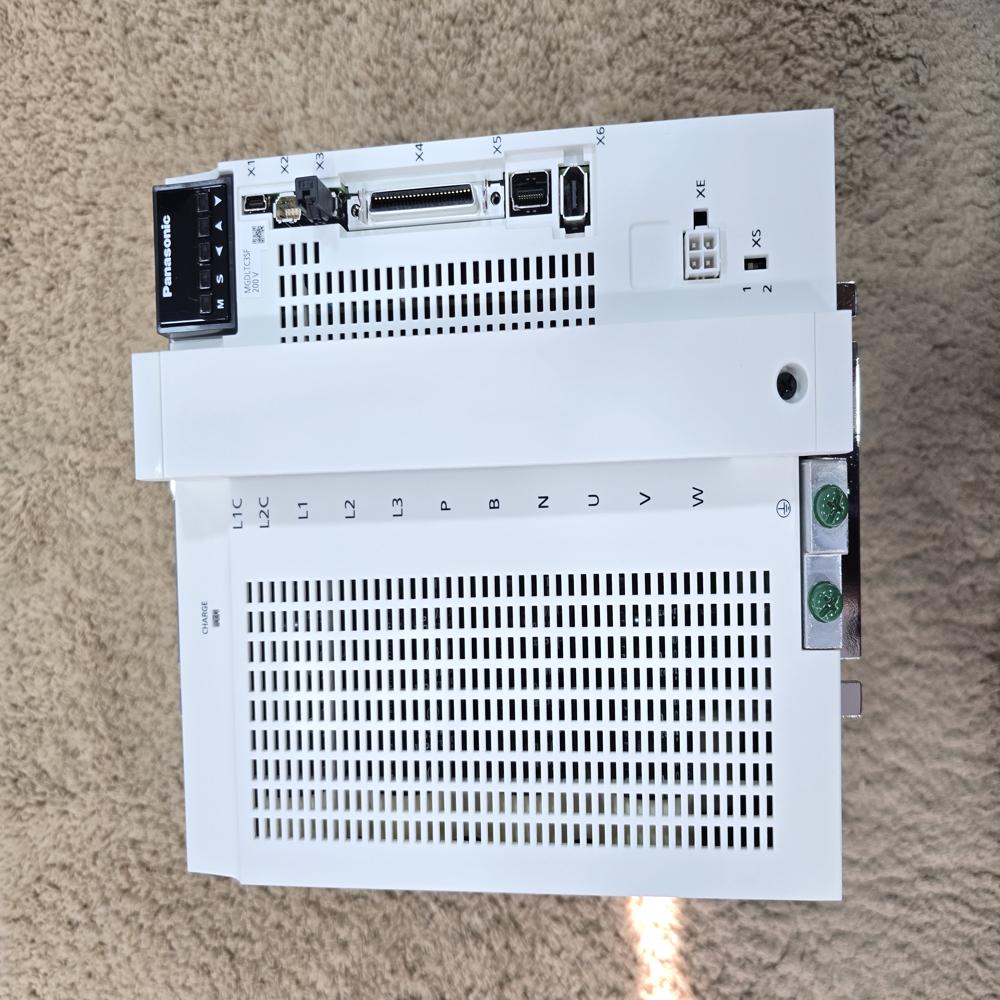
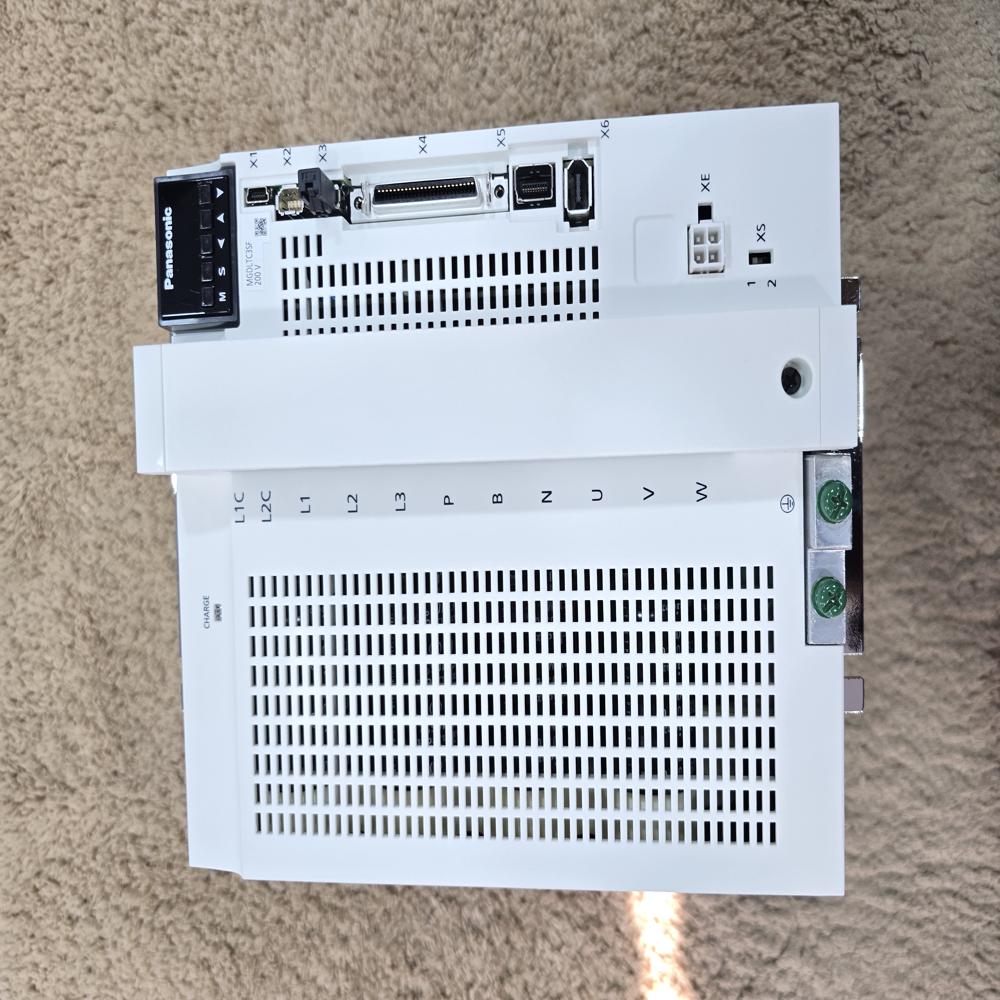
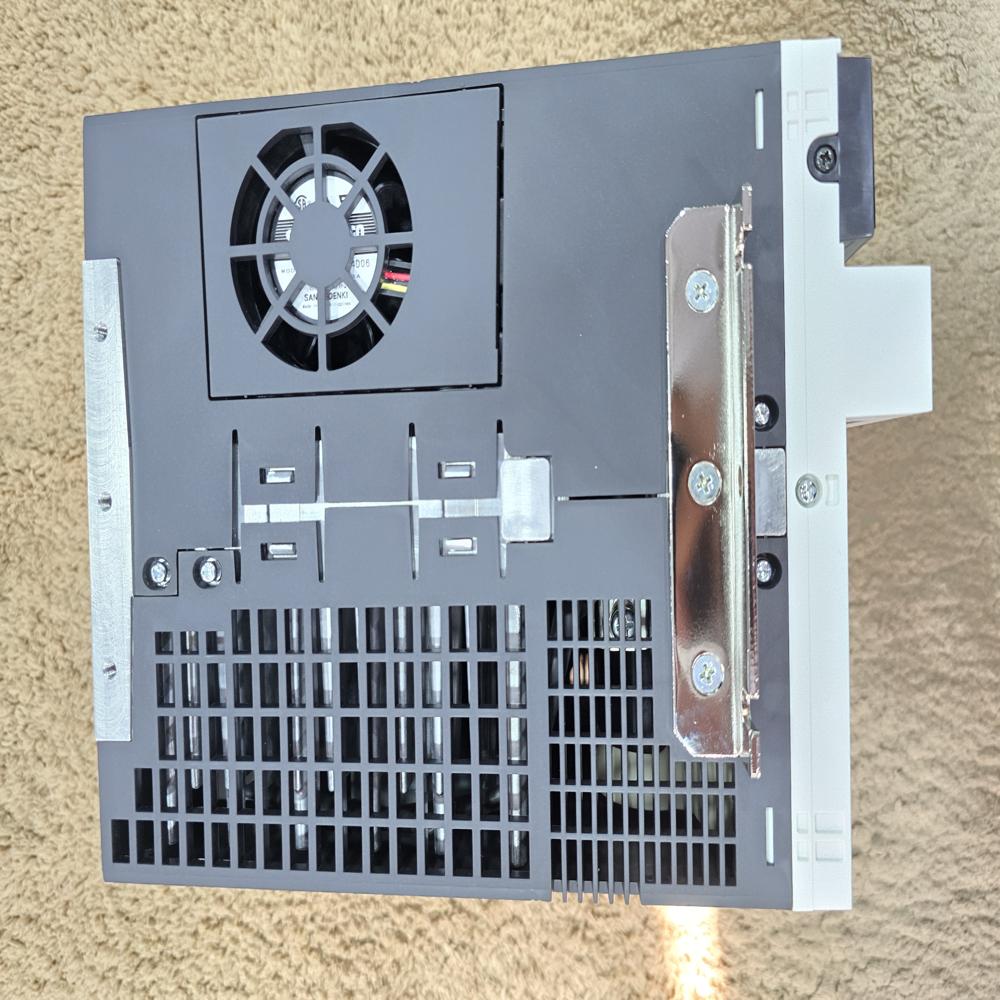
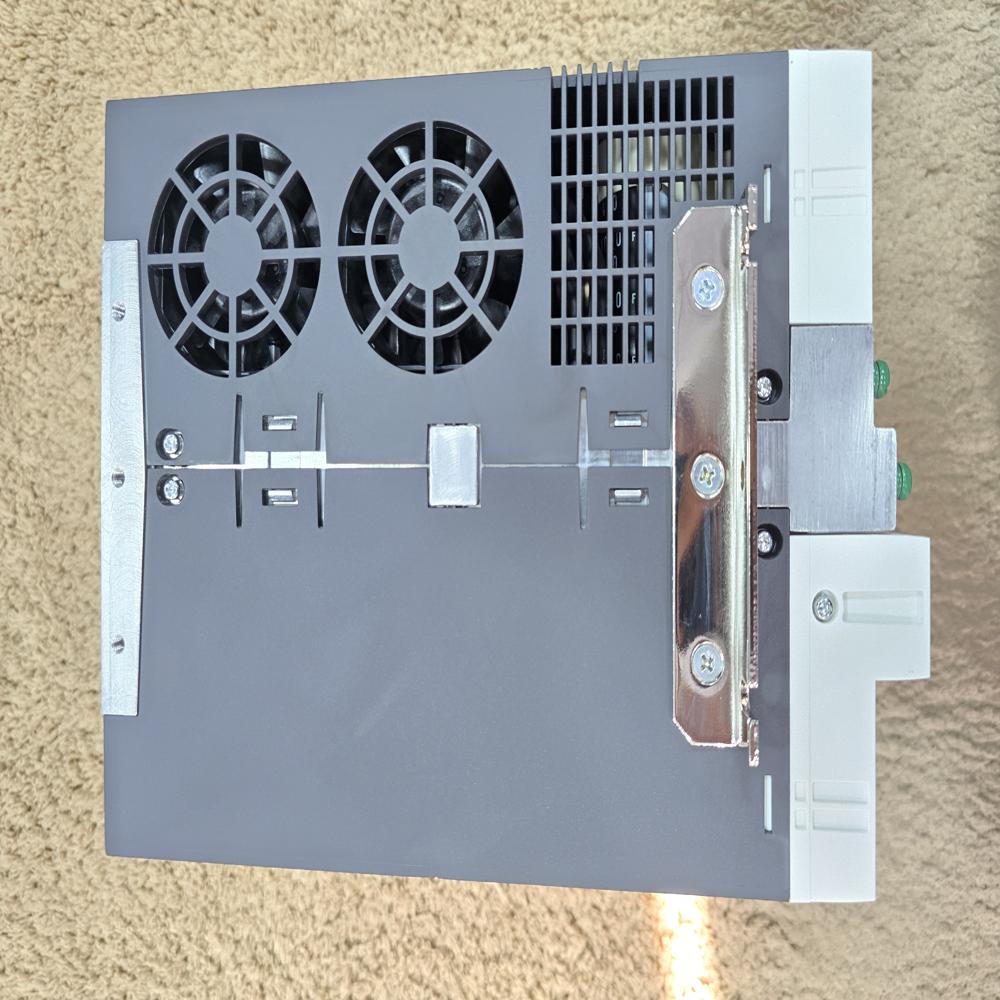
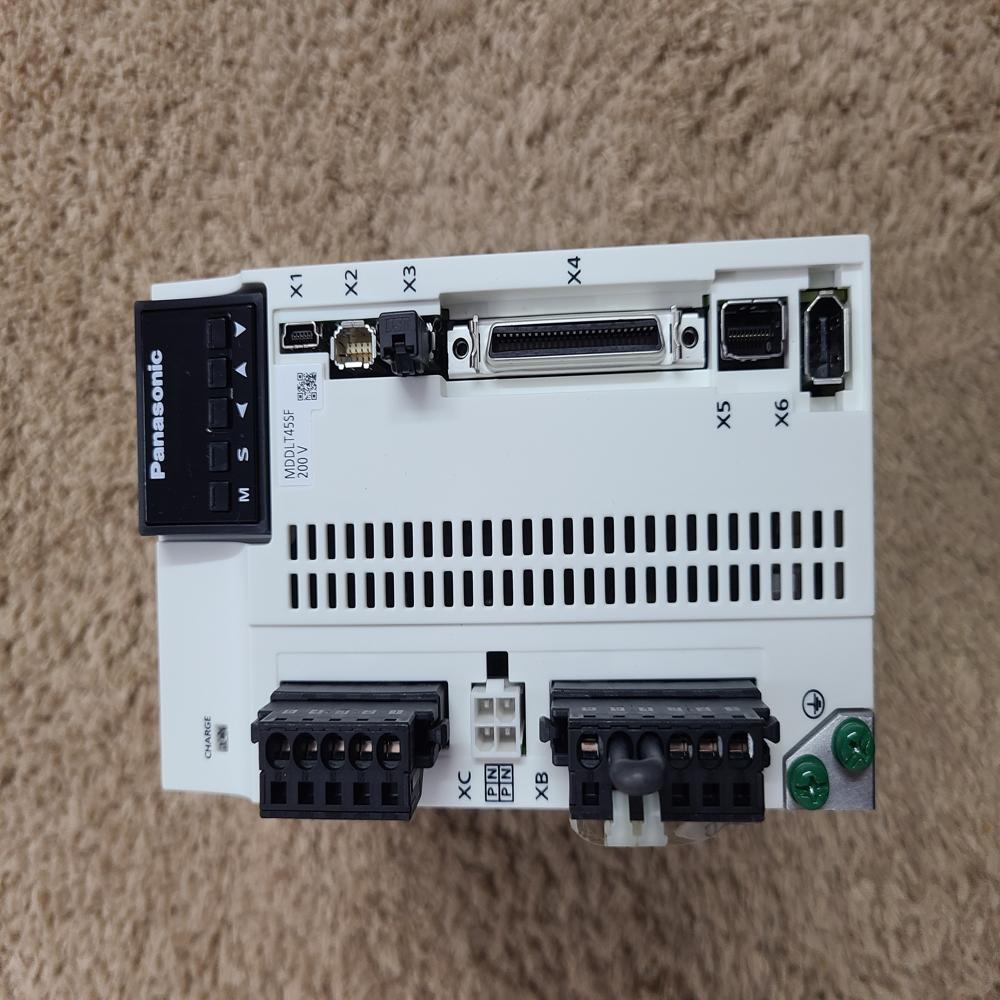
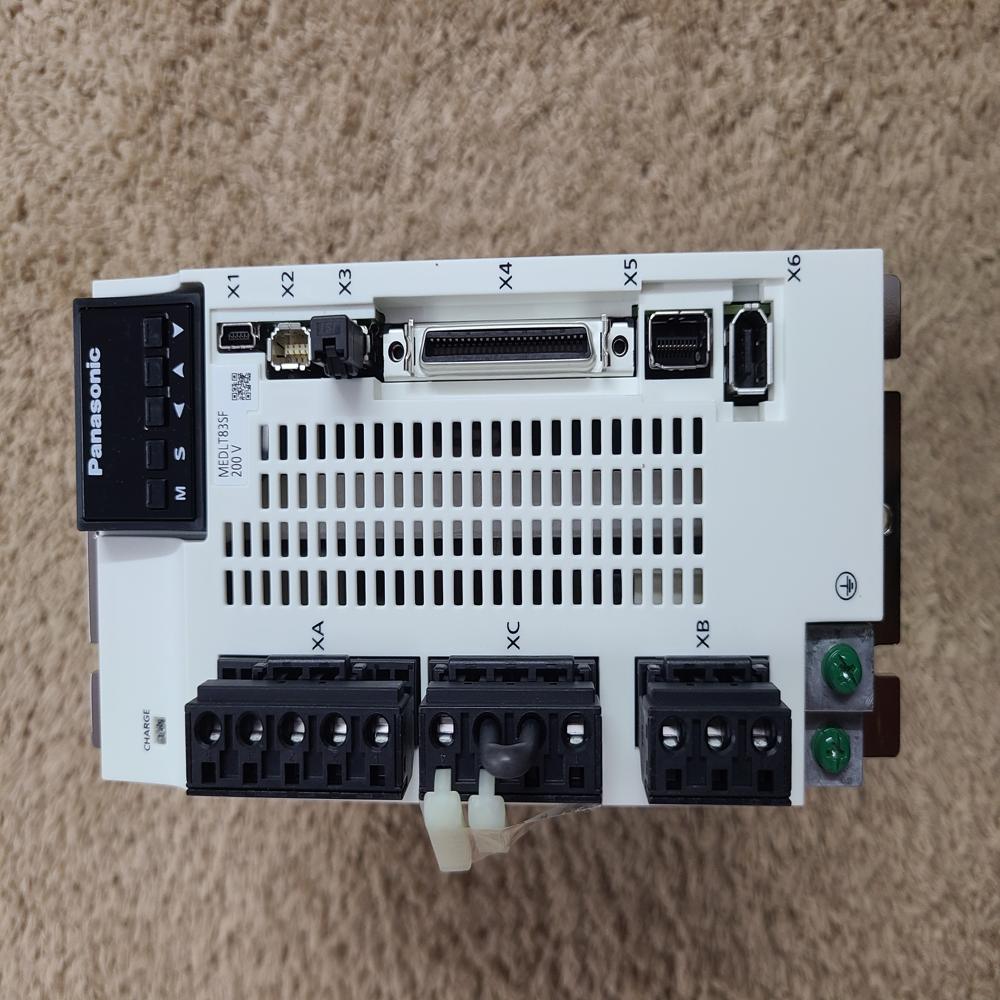
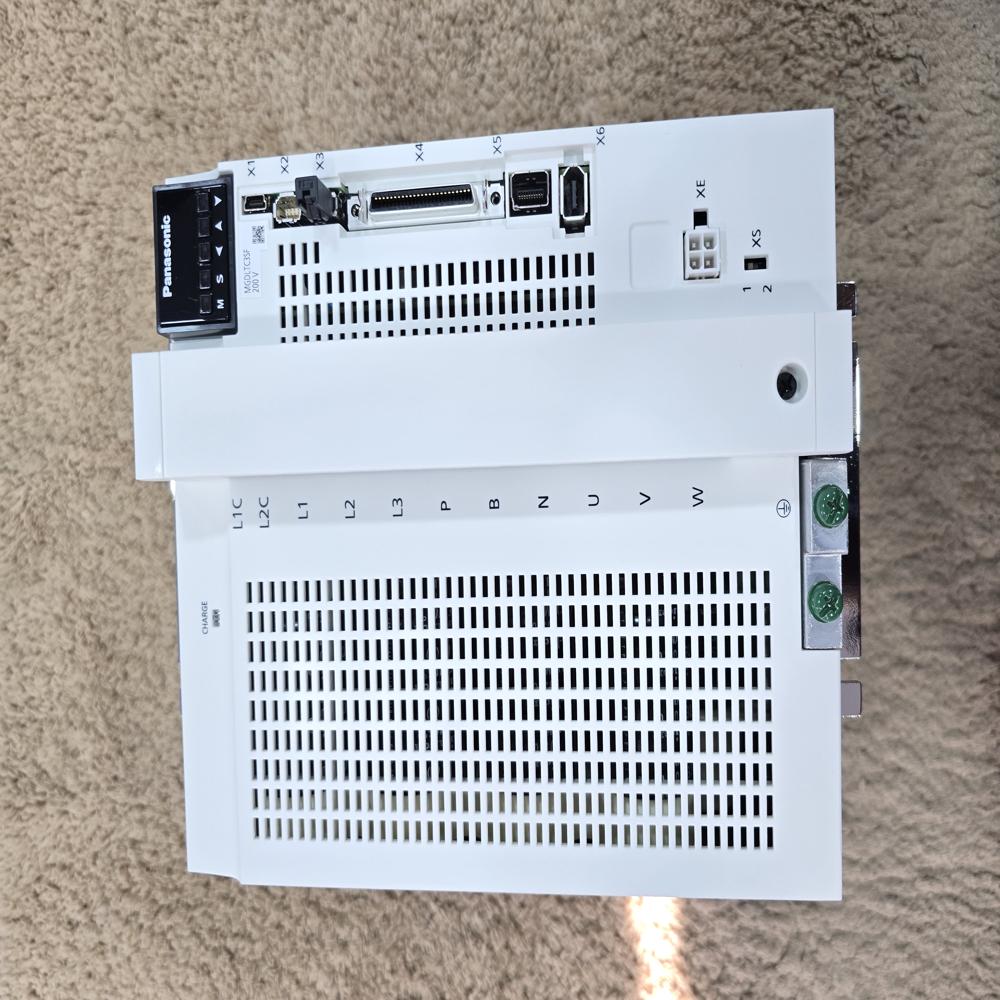
The Panasonic MGDLTC3NF (A6N Series) functions as a Network-Managed Power Converter. While the A6SF (Multifunction) version you looked at earlier relies on individual signal wires, this A6N model is built for high-speed, synchronized machine communication.
1. RTEX (Realtime Express) Network Hub
The defining function of this driver is its RTEX communication capability.
- Daisy-Chain Wiring: It functions as a node in a high-speed Ethernet loop. Instead of running 20+ wires for control signals, you use a single RJ45 cable to connect it to the next driver.
- Perfect Synchronization: It allows multiple motors (up to 32 axes) to move in perfect harmony. This is vital for tasks like 3D curved cutting or multi-arm robotics where every motor must be "in sync" within microseconds.
2. High-Power Electrical Management
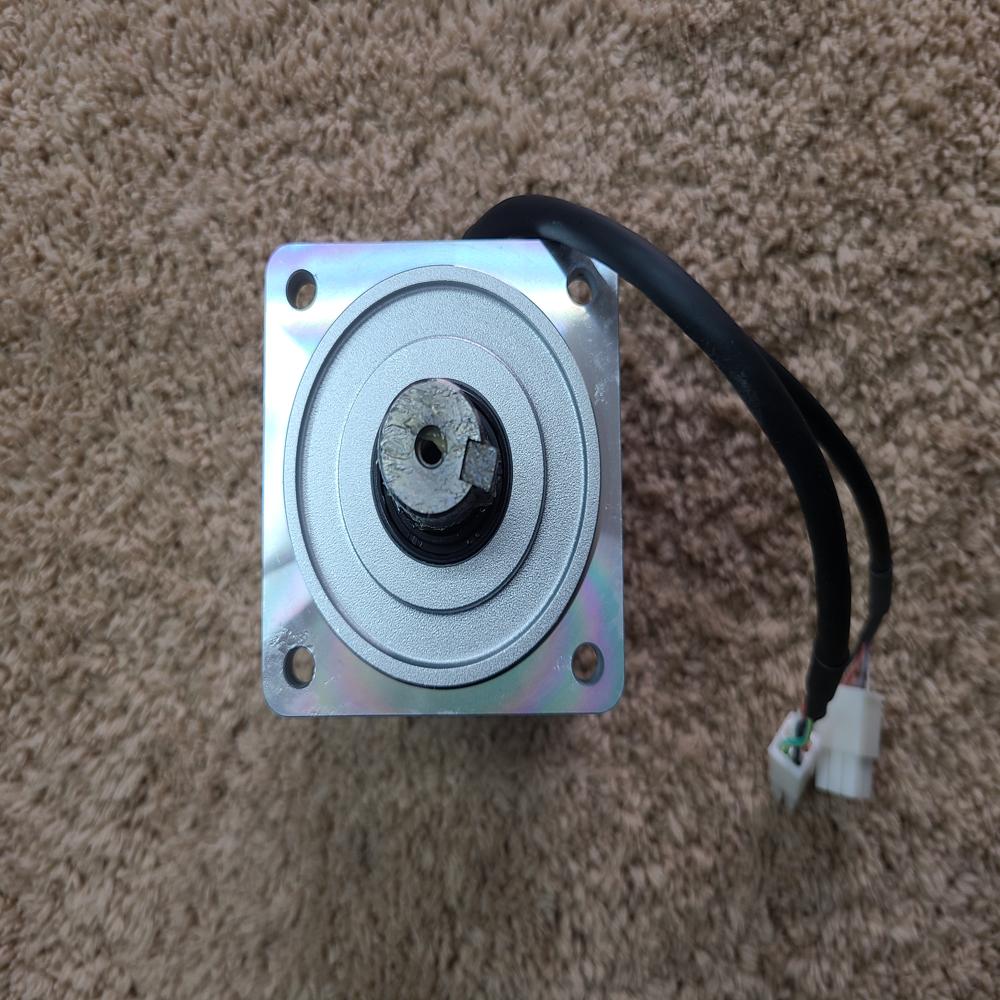
- 7.5kW Energy Delivery: It takes 3-phase AC power and converts it into the precise high-current pulses required to drive the MDMF752 motor at 48 Nm of torque.
- Regenerative Braking Management: When a heavy 7.5kW load slows down, it creates "returned" electricity. This driver functions to manage that energy, often through an external regenerative resistor, to prevent the system from surging or overheating.
3. Digital Feedback Processing
- 23-bit Data Translation: It receives 8,388,608 pulses per revolution from the motor's encoder. It functions to translate this massive stream of data into position and speed information that it sends back to the master controller (PLC) over the network.
- Full-Closed Loop Support: It can simultaneously process data from the motor AND an external scale on the machine to eliminate errors caused by mechanical "slop" or gear backlash.
4. Advanced "Auto-Self" Functions
- Real-time Auto-tuning: The driver "feels" the mechanical load. If the load changes (e.g., a heavy part is added to a conveyor), it functions to automatically adjust its internal gain settings to prevent the motor from overshooting or vibrating.
- System Diagnostics: It functions as a health monitor for the entire axis, reporting specific error codes (like over-voltage, encoder errors, or network loss) directly to the machine's HMI screen.
5. Hardware Safety (STO)
- Safe Torque Off: It has a dedicated hardware function to cut motor torque while keeping the electronics powered. This allows operators to safely interact with the machine without a full reboot.
Summary: Think of the A6N as the "Smart Network" version. It is best used when you have a complex, multi-axis machine controlled by a single master controller via Ethernet cables.

 Send Inquiry



 Send Inquiry

 Send Inquiry
 English
 Spanish
 French
 German
 Italian
 Chinese (Simplified)
 Japanese
 Korean
 Arabic
 Portuguese