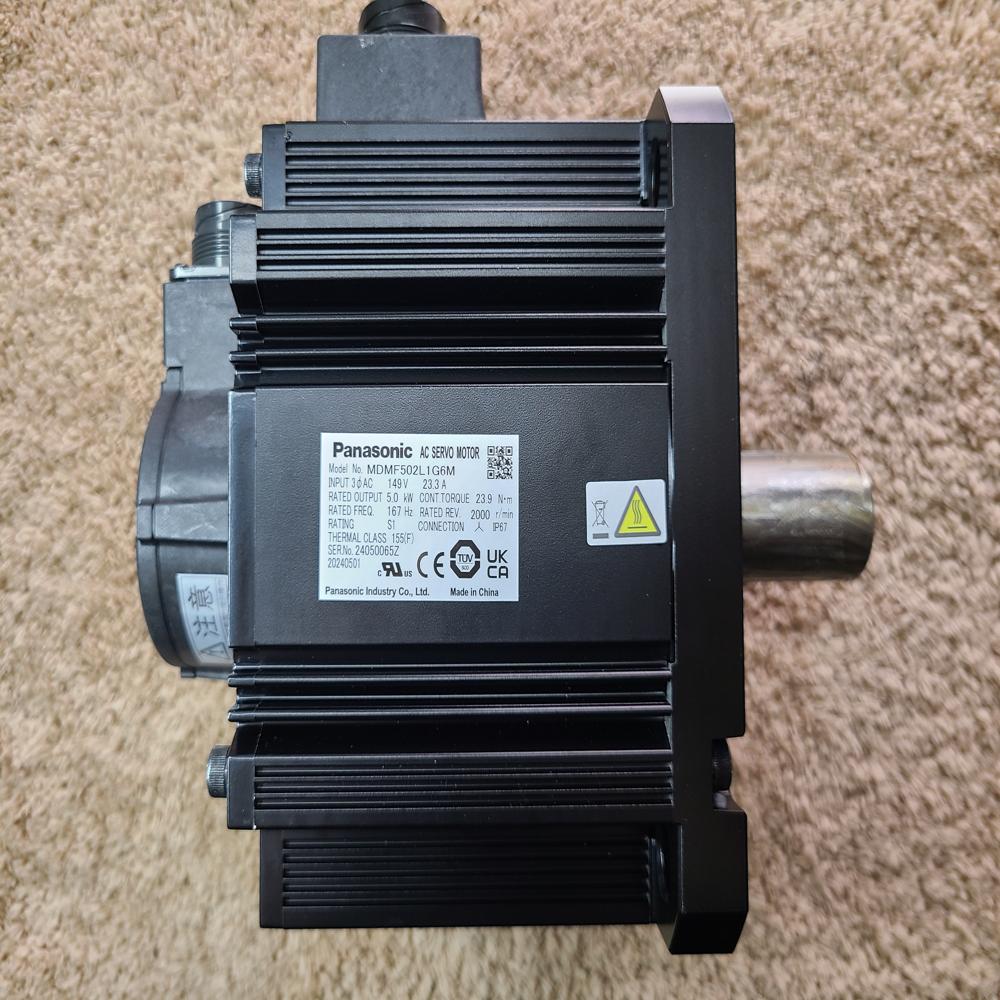
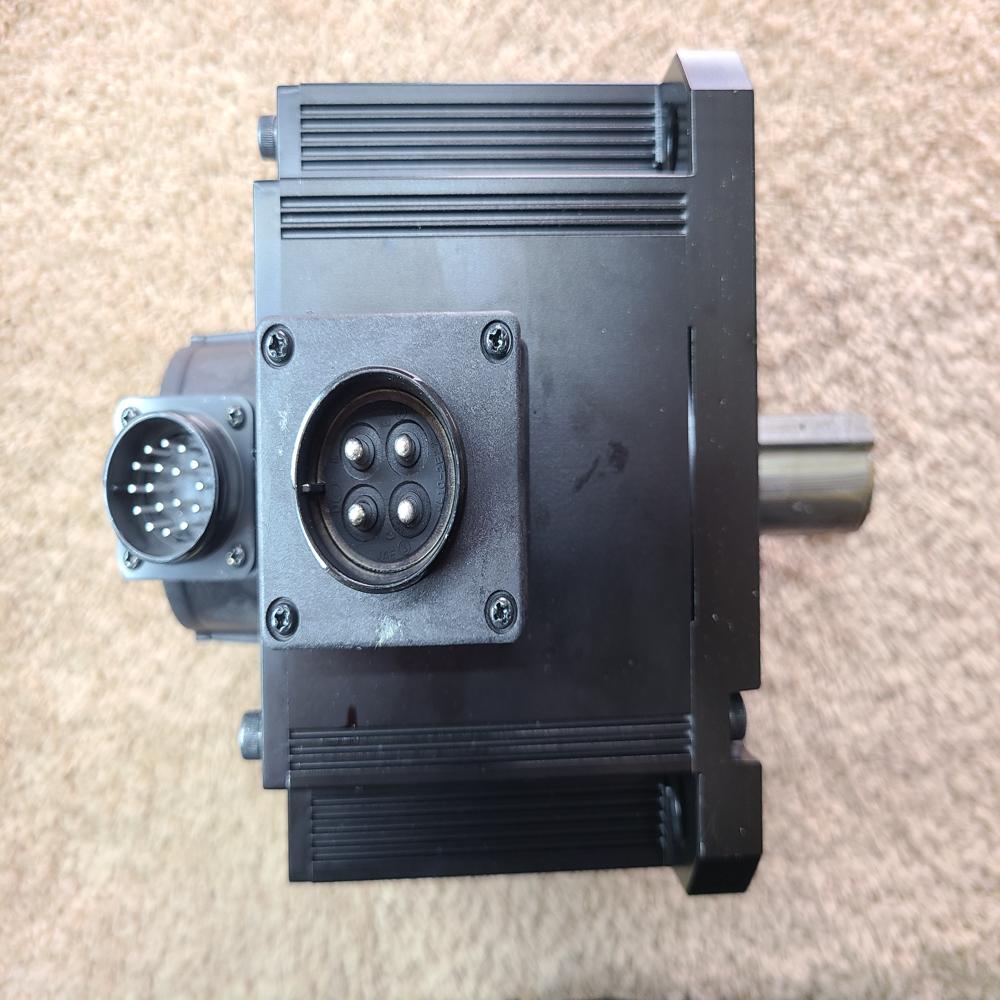
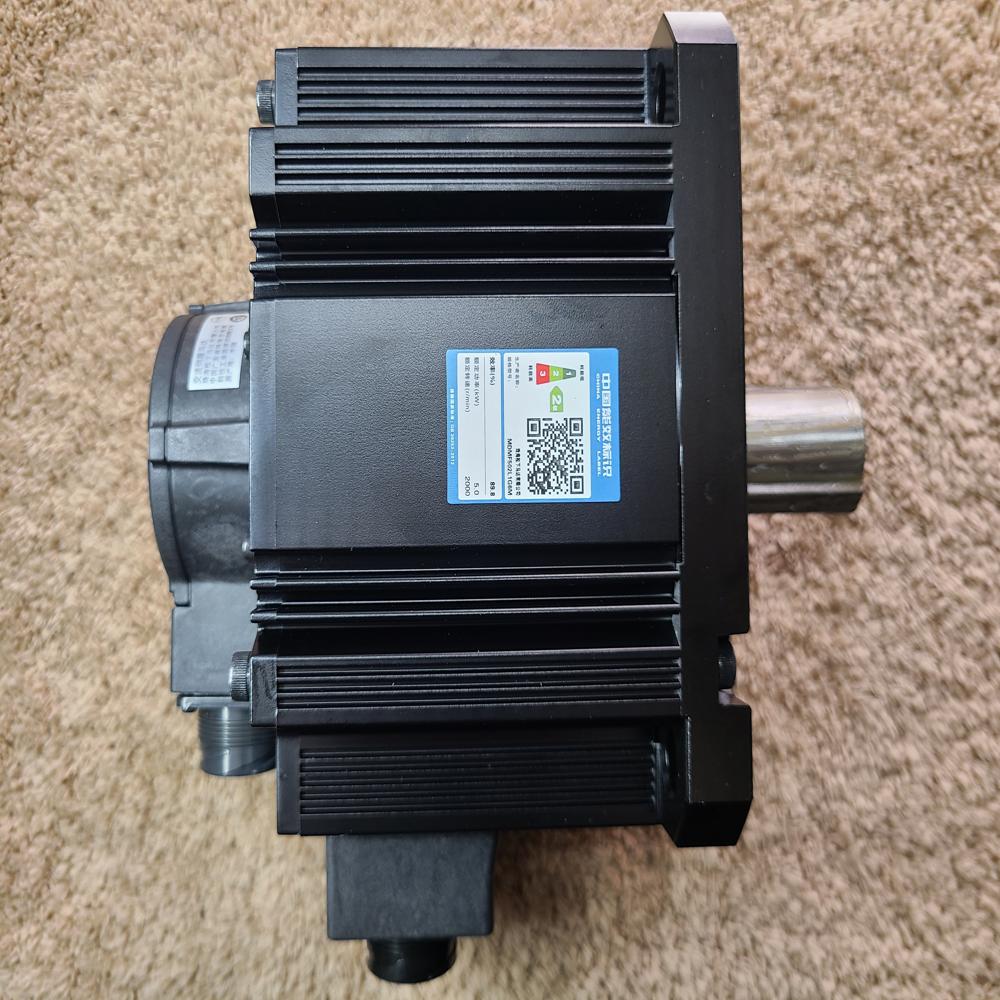
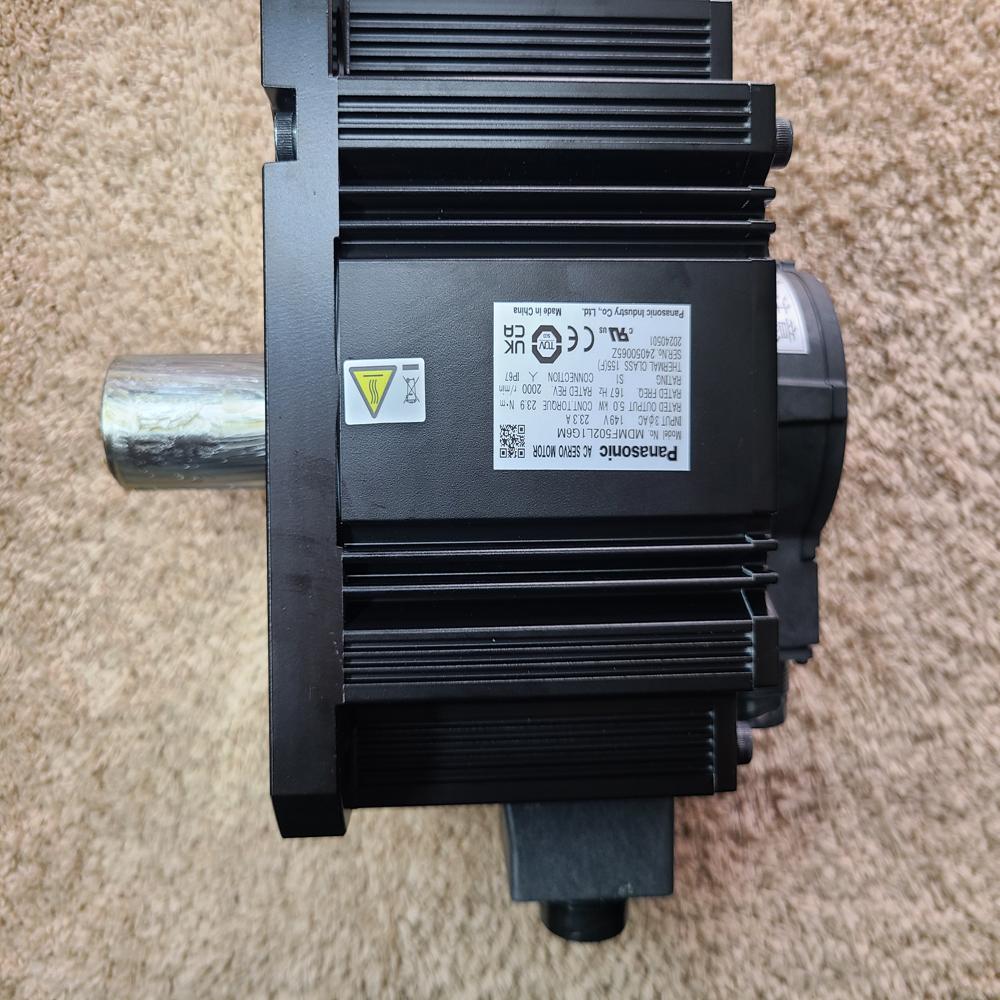
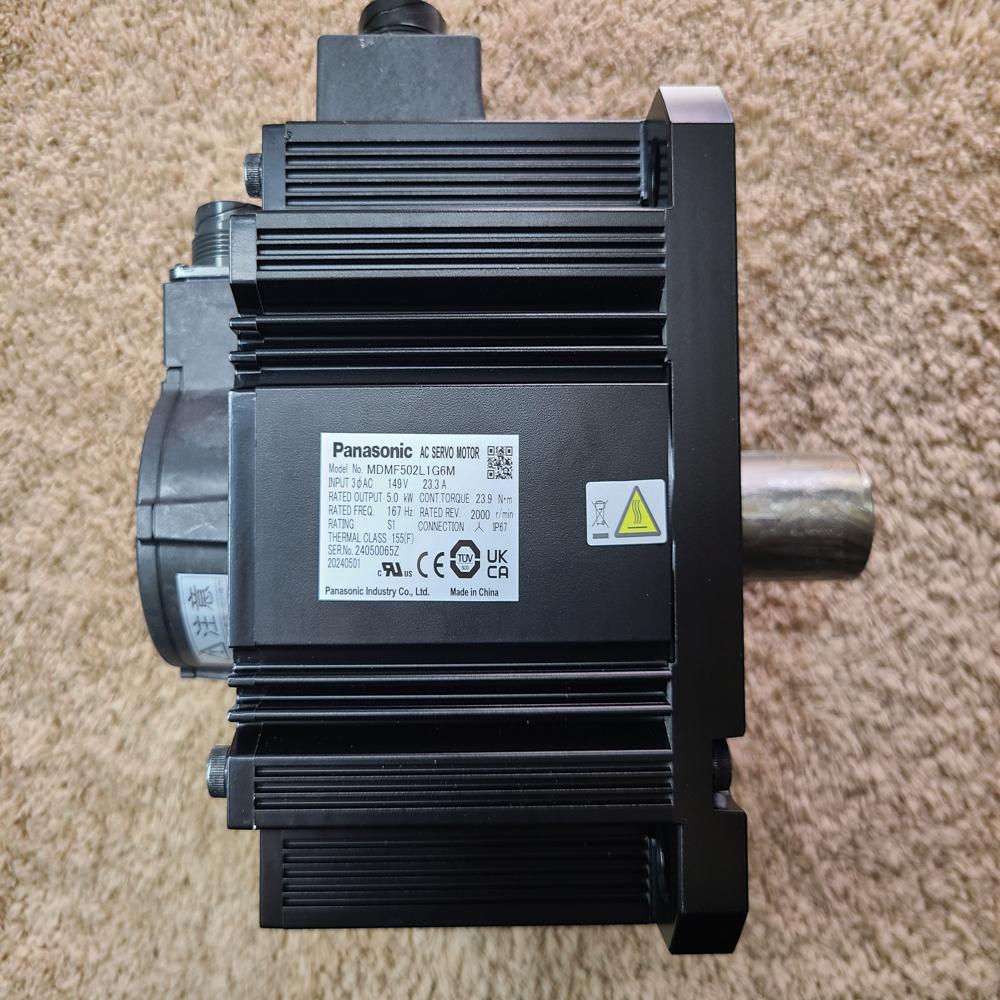
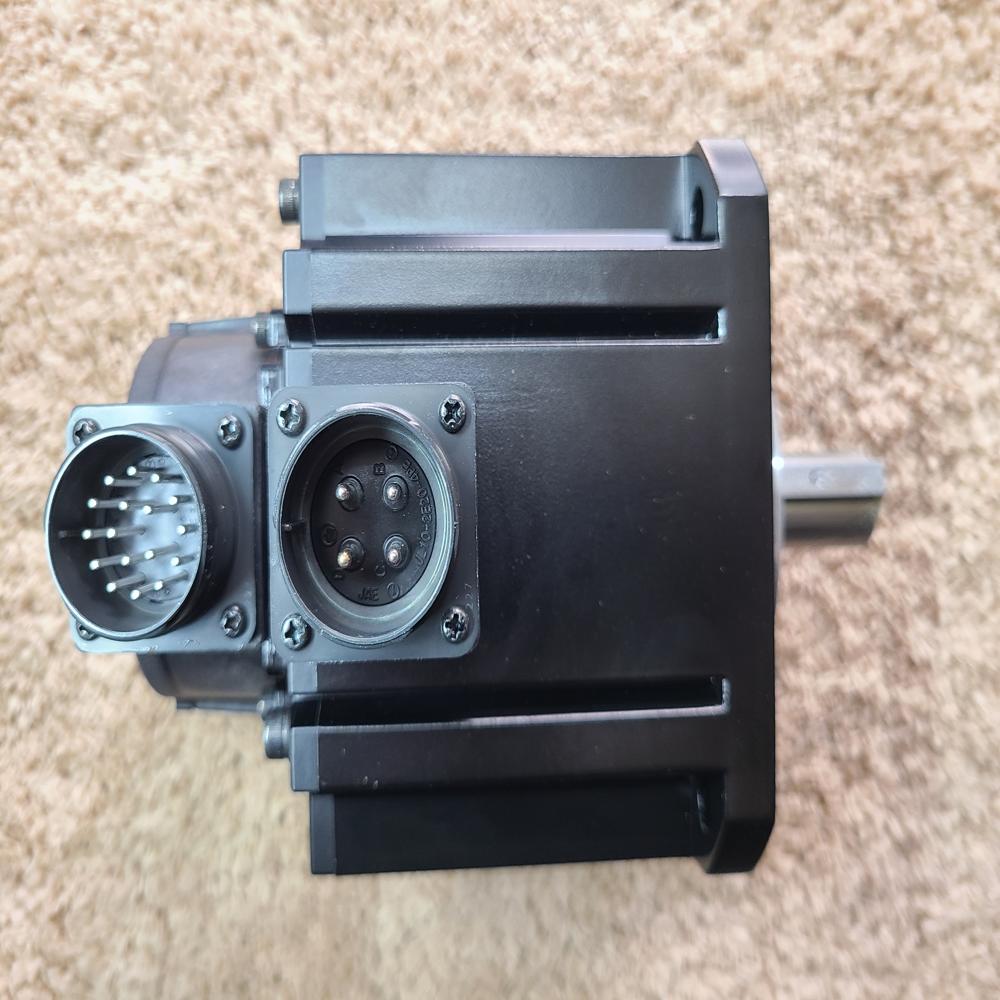
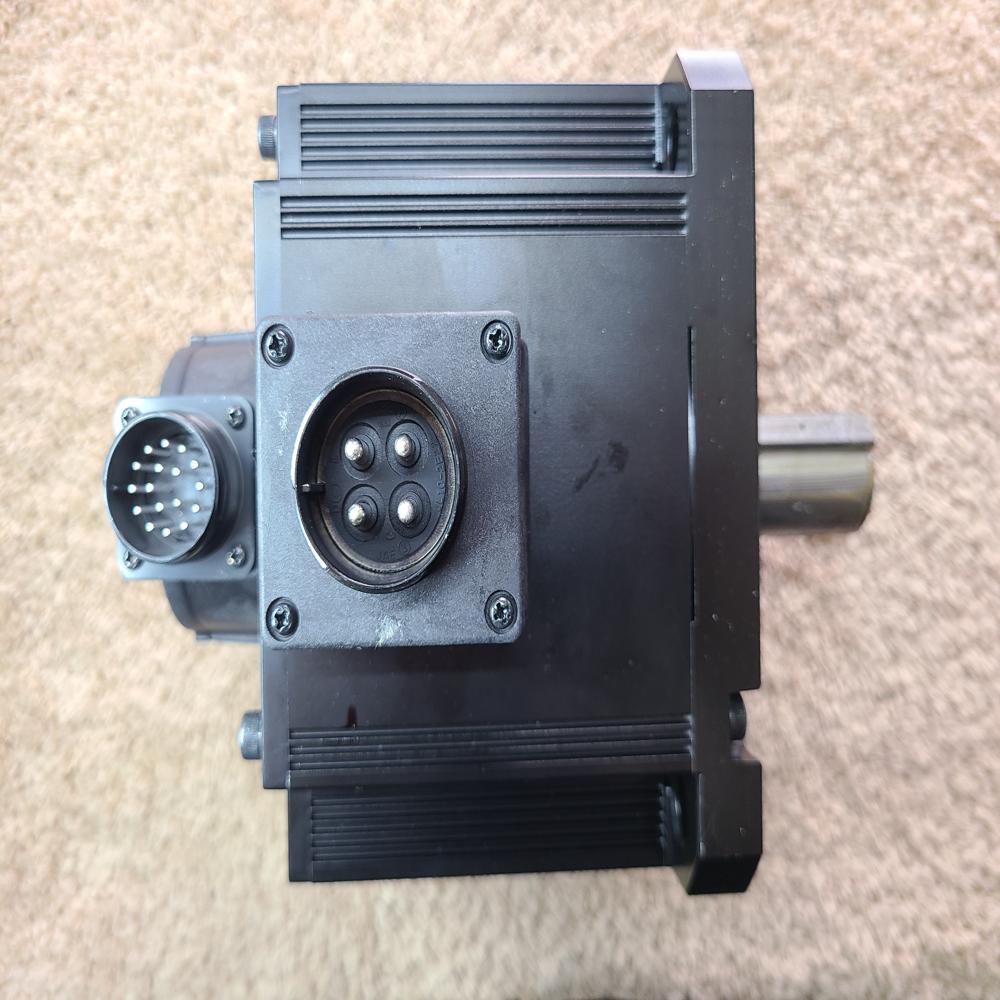
About MHMF502L1G6M Panasonic A6 5000W Motor , Torque Nm - 23.9, RPM - 2000
The Panasonic MHMF502L1G6M is a 5000W (5.0 kW) High-Inertia AC servo motor from the MINAS A6 series. It is the most stable 5 kW motor in the lineup, specifically engineered to provide maximum mechanical dampening for very large industrial loads.
Function
- Maximum Load Stability: Its primary role is to move massive machinery (like large CNC gantries or heavy robotic arms) without vibration. The High-Inertia rotor acts as a mechanical stabilizer, preventing the "shaking" that occurs when moving heavy loads with lighter motors.
- Precision and Power: It provides extreme positioning accuracy through its 23-bit encoder (8.38 million pulses/rev) while delivering a massive 23.9 Nm of continuous torque.
- Industrial Ruggedness: Rated IP67, meaning it is completely dust-tight and resistant to water immersion, making it ideal for the harshest factory environments.
Technical Specifications
| Feature |
Specification |
| Rated Output |
5000 W (5.0 kW) |
| Rated Torque |
23.9 Nm |
| Peak Torque |
71.6 Nm |
| Rated / Max Speed |
2000 RPM / 3000 RPM |
| Voltage |
200 V AC |
| IP Rating |
IP67 |
| Holding Brake |
Without Brake ("G" model) |
Physical Dimensions & Weight (Inches & Lbs)
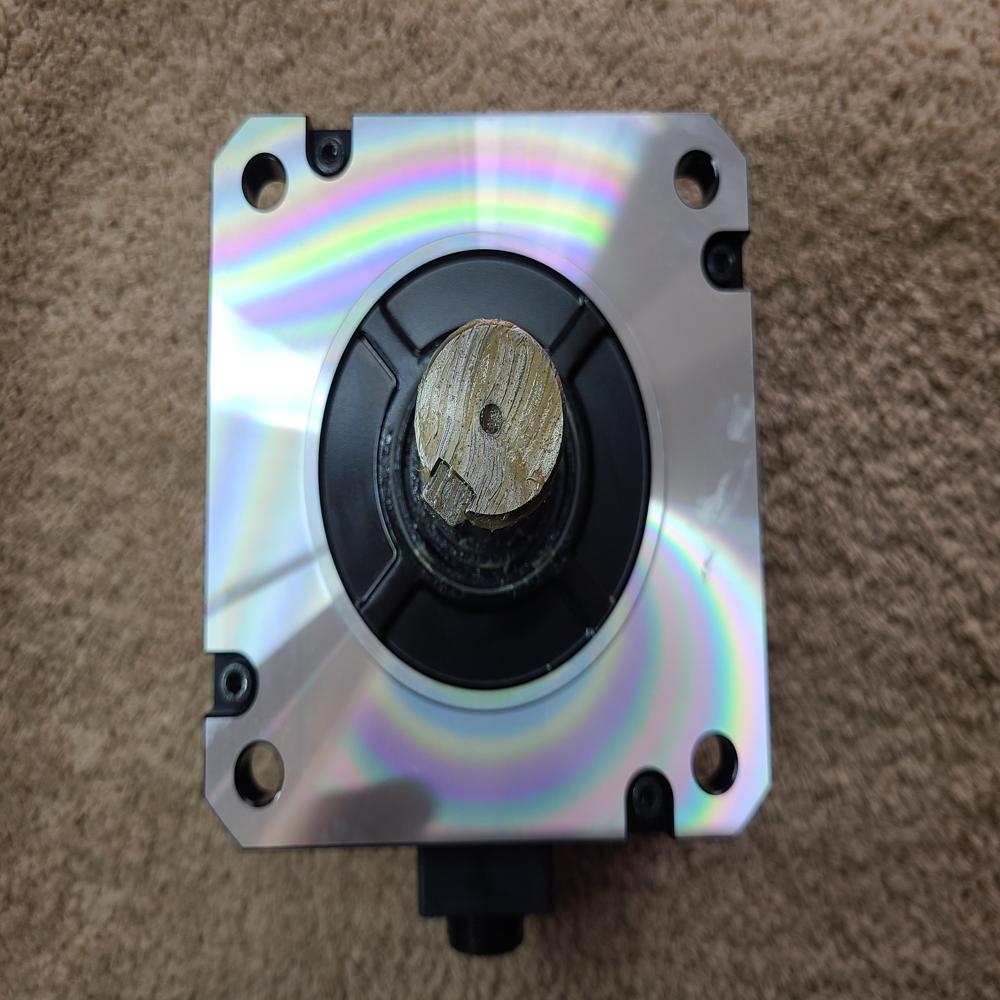
This is one of the largest motors in the A6 family due to the high-inertia rotor and 176 mm flange.
- Weight: Approximately 61.29 lbs (27.8 kg).
- Width & Height (Flange): 6.93 inches (176 mm square).
- Length (Motor Body): Approximately 10.04 inches (255 mm).
- Shaft Diameter: 1.378 inches (35 mm).
- Shaft Length: 2.76 inches (70 mm).
Compatible Drivers
This motor requires the high-current H-Frame A6 drivers:
- Multifunction: MHDLTB3SF
- Basic: MHDLNB3SE
- EtherCAT: MHDLNB3NE
The primary function of the Panasonic MHMF502L1G6M is to provide maximum mechanical stability and power for the heaviest, high-mass industrial loads. It is the "heavyweight stabilizer" of the 5.0 kW range, specifically built to move massive parts without the vibration or "hunting" that smaller motors would experience.
1. Maximum Stability (High-Inertia Advantage)
The "High-Inertia" design is its most critical functional feature.
- Vibration Dampening: When moving a massive machine part (like a large steel gantry or a heavy press), a lighter motor often causes the system to shake. This motor has a heavy internal rotor that acts as a mechanical flywheel, absorbing shocks and preventing resonance.
- Inertia Matching: It is designed for machines with a high "load-to-motor" inertia ratio, ensuring smooth control even when the weight being moved is significantly larger than the motor itself.
2. High-Torque Sustained Power
While high-speed motors (MSMF) focus on quick bursts, this motor focuses on raw pushing power.
- Raw Force: It delivers a constant 23.9 Nm of torque (surging to a massive 71.6 Nm peak). This provides the "muscle" to drive large-diameter ball screws and heavy-duty gearboxes that move massive industrial components.
- Applications: It is the standard choice for large-scale CNC gantries, heavy-duty material handling robots, and large industrial spinning machinery.
3. Precision at Scale
Despite its brute force and heavy loads, it maintains surgical accuracy:
- 23-bit Resolution: It tracks its position within 8,388,608 increments per single turn. This allows a massive machine part to be positioned within microns of its target.
- High Response Frequency: It communicates with the driver 3,200 times per second (3.2 kHz) to instantly correct any deviations in speed or path caused by the heavy load.
4. Rugged Industrial Performance
- IP67 Environmental Shield: The motor is functionally sealed against heavy dust, oil mist, and high-pressure water spray. This allows it to work reliably on the "front lines" of heavy manufacturing floors.
- Thermal Efficiency: Its large physical size (176mm flange) allows it to dissipate heat efficiently even when running at its rated 2000 RPM for 24/7 production cycles.
5. Smart Health Monitoring
- It acts as a diagnostic hub, feeding real-time data back to the driver about its temperature and torque usage. This allows for predictive maintenance, warning the operator of mechanical wear before a breakdown occurs.

 Send Inquiry



 Send Inquiry

 Send Inquiry
 English
 Spanish
 French
 German
 Italian
 Chinese (Simplified)
 Japanese
 Korean
 Arabic
 Portuguese